To determine how to choose tires, you must first identify your vehicle's required size and load capacity as listed in the owner's manual. Drivers in Delaware should prioritize all season or winter tires to handle varying regional weather conditions; furthermore, checking tread wear ratings and traction grades ensures long term performance and safety.
Choosing a new set of tires often feels like a high stakes guessing game where technical jargon and endless brands cloud your judgment. For Delaware drivers, the decision impacts more than just ride quality; it dictates your safety during sudden coastal rainstorms and your vehicle's performance on congested city streets. Selecting the wrong tire can lead to premature wear or compromised handling, effectively wasting your investment. In this professional guide, we simplify the selection process by deconstructing complex sidewall markings and evaluating how your specific driving habits influence the ideal rubber compound. You will learn to navigate the differences between all season and winter performance, understand the nuances of tread life warranties, and master the technical requirements of TPMS compatibility. By the end, you will possess the expertise needed to inspect your current set and choose a replacement that offers maximum value and reliability.
Understanding the Fundamentals: How to Read Tire Sidewall Markings
Before you can select the right replacement, you must understand the technical specifications currently supporting your vehicle. The string of alphanumeric characters embossed on your tire sidewall may look like a random code, but it provides every metric required for a professional service experience. Understanding these markings is the critical first step in learning how to choose tires that match your vehicle's manufacturer specifications.
Consider the example P225/50R17. The first letter identifies the tire class. A "P" indicates a P-Metric tire, which is engineered for passenger vehicles like sedans, SUVs, and light-duty crossovers. If you see "LT," it stands for Light Truck. These tires feature heavier construction to handle higher load capacities and increased inflation pressures required for towing or heavy hauling.
The numbers that follow define the tire's physical dimensions:
Component | Code | Definition |
|---|---|---|
Width | 225 | The distance in millimeters from sidewall to sidewall. |
Aspect Ratio | 50 | The height of the sidewall expressed as a percentage of the width. |
Construction | R | Radial construction, the industry standard for durability and grip. |
Wheel Diameter | 17 | The size of the wheel in inches that the tire is designed to fit. |
Accuracy in reading these specs is vital when using online tire ordering. Even a slight deviation in aspect ratio or width can affect your speedometer accuracy, fuel economy, and clearance within the wheel well. At Limitless Tires, our technicians bring at least five years of experience to every tire installation and repair. We verify these fundamentals against your vehicle’s door placard to ensure that the load index and speed rating of your new tires meet or exceed original equipment standards. This technical precision prevents premature wear and ensures your vehicle handles exactly as the engineers intended.
Evaluating Your Driving Habits and Delaware Terrain
Understanding the technical markings on your sidewall is a prerequisite, but the environment where you drive dictates which specific tire category will perform best. New Castle sits at a logistical crossroads in the Mid-Atlantic. If your daily routine involves a commute on I-95, your priorities likely lean toward fuel efficiency and low road noise. Continuous high-speed travel generates significant internal heat; therefore, selecting a tire with a high temperature rating is essential for maintaining structural integrity over long distances.
Conversely, city driving in nearby Wilmington presents different challenges. The frequent stop and start nature of urban traffic puts higher stress on the tire’s shoulder blocks and increases tread wear compared to steady highway cruising. For those frequently traveling rural roads in Southern Delaware, you may encounter uneven pavement or standing water during heavy coastal rains. In these conditions, grip and hydroplaning resistance become the primary safety factors to consider.
When determining how to choose tires, evaluate your annual mileage alongside these environmental factors. A driver covering 20,000 miles a year on the Delaware Memorial Bridge and local interstates will benefit from a touring tire designed for comfort and extended tread life. If you prioritize precise handling for winding backroads, a performance-oriented compound might be worth the trade-off in total mileage. Before you finalize an online tire ordering request, consider if you value a quiet cabin over maximum wet-weather traction. Matching the tire’s specific design to your typical Delaware terrain ensures you receive the best return on your investment and a safer driving experience.
Selecting Tires for the Seasons: All Season versus Winter Performance
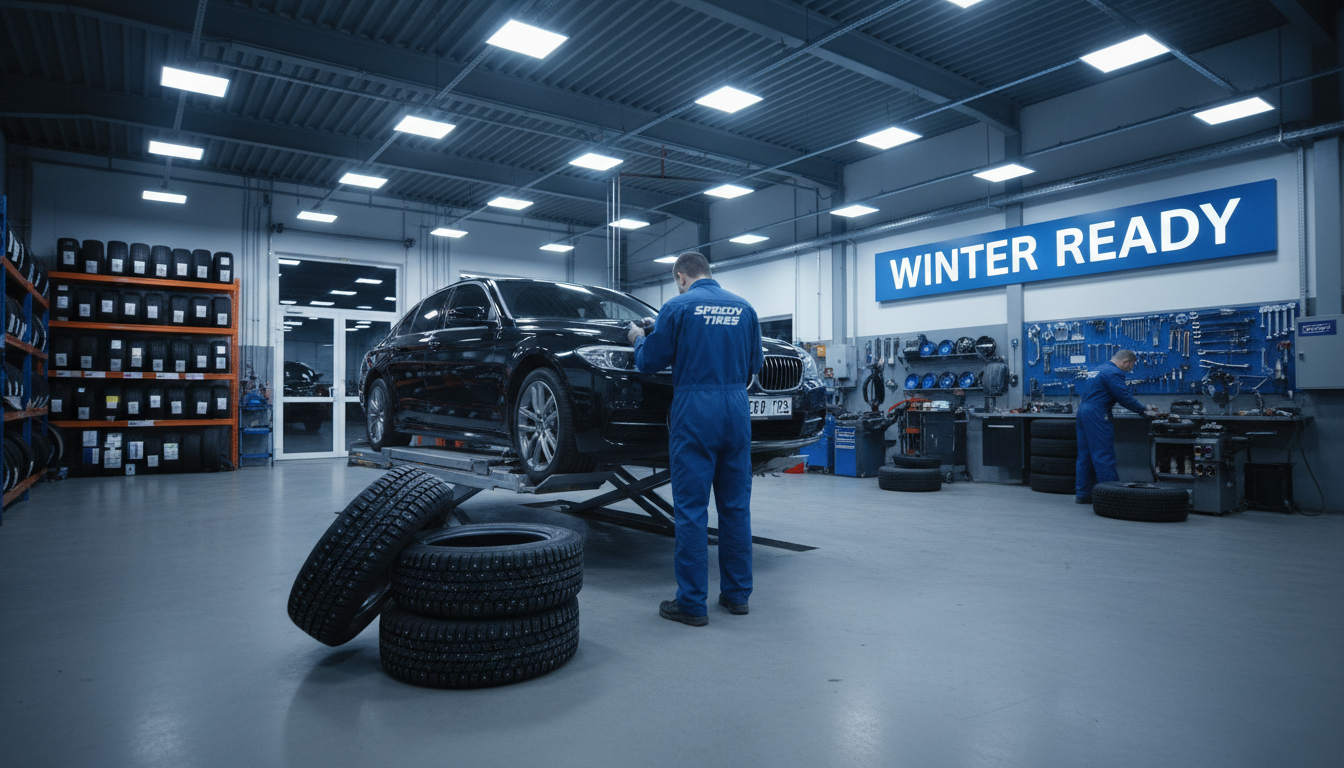
The climate in New Castle demands a nuanced approach to seasonal rubber compounds. While all-season tires are the most common choice due to their convenience, they are best described as jacks of all trades and masters of none. These tires are designed to provide acceptable traction in a wide range of conditions, but they cannot match the specialized performance of seasonal tires when temperatures reach extremes.
The critical metric for performance is the 45 degree Fahrenheit threshold. Once the ambient temperature drops below 45 degrees, the rubber compounds in summer and many all-season tires begin to harden. This process, known as glass transition, significantly reduces the tire's ability to grip the road surface, even on dry pavement. Understanding this thermal limit is a vital part of learning how to choose tires that provide consistent safety.
Tire Category | Best Temperature Range | Primary Characteristic | Identification |
|---|---|---|---|
All-Season | 40°F to 90°F | Balanced longevity and grip | M+S (Mud and Snow) |
Winter / Snow | Below 45°F | Stays flexible in extreme cold | 3PMSF (Snowflake/Mountain) |
Summer / Performance | Above 45°F | Maximum dry and wet traction | No specific M+S symbol |
Dedicated winter tires feature high silica content to maintain flexibility in freezing temperatures. They also utilize deep sipes, which are small slits in the tread blocks that bite into ice and packed snow. If your winter commute involves early morning trips before New Castle plows have cleared the roads, look for the Three-Peak Mountain Snowflake (3PMSF) symbol on the sidewall. Conversely, if you drive a high-performance vehicle during Delaware’s hot, humid summers, a dedicated summer tire offers superior braking and cornering stability that no all-season can replicate.
When you use online tire ordering, consider if a single set of tires is sufficient for your safety needs or if a seasonal swap is a better investment. Our technicians provide tire installation and repair that accounts for these seasonal shifts, ensuring your vehicle remains planted regardless of the Delaware weather.
Tread Life and Warranty: Getting the Best Value for Your Vehicle
Selecting a tire based on the initial price tag often overlooks the total cost of ownership. To accurately assess value, you must look at the Uniform Tire Quality Grading (UTQG) rating found on the sidewall. The treadwear grade is a comparative rating; for example, a tire graded 600 should theoretically last three times longer than a tire graded 200.
Treadwear Rating | Expected Longevity | Best Use Case |
|---|---|---|
200 – 300 | Lower | High-performance or seasonal specialty |
400 – 500 | Moderate | Standard daily commuting |
600 – 800+ | Higher | Long-distance touring and highway travel |
When researching how to choose tires, calculate the cost per mile rather than the checkout total. A budget tire costing $100 with a 30,000 mile life effectively costs more over five years than a premium $160 tire that lasts 70,000 miles. During our professional service experience, we also advise clients to distinguish between two types of warranties: mileage and materials. A mileage warranty provides a pro-rated credit if the tread wears down prematurely, whereas a workmanship warranty covers manufacturing defects. Confirming these details during online tire ordering ensures your investment is protected against both natural wear and unforeseen failures.
Don't Forget the Tech: Why TPMS Compatibility Matters
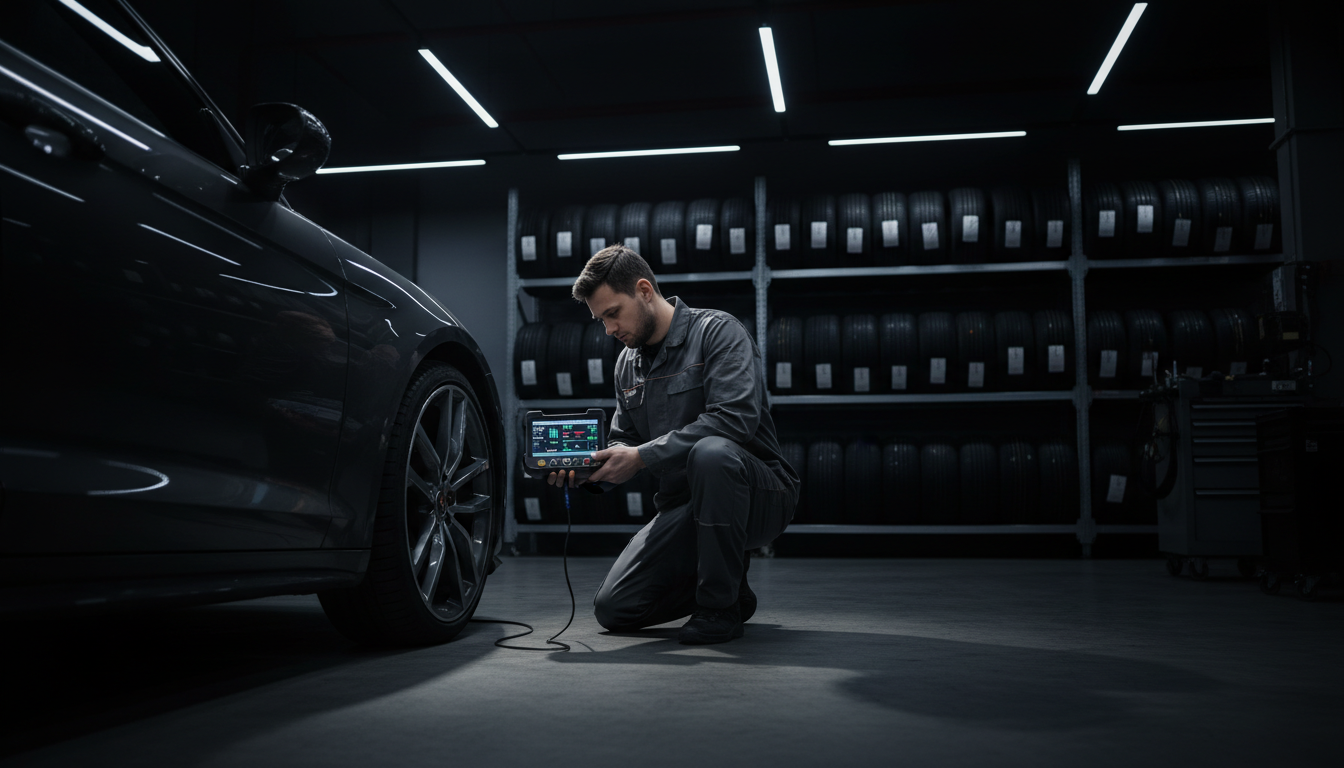
Modern vehicles rely on more than just physical rubber to ensure safety; they utilize digital monitoring systems that must be synchronized during every tire installation and repair. When researching how to choose tires, many drivers overlook the Tire Pressure Monitoring System (TPMS). These sensors, typically located inside the wheel or integrated into the valve stem, monitor internal air pressure in real time to prevent blowouts and optimize fuel efficiency.
During a tire swap, these sensors are sensitive components that require specific handling. A professional installation involves more than mounting rubber. It requires replacing the TPMS service kit, which includes a new rubber grommet, nut, and valve core to prevent slow leaks that often occur when old hardware is reused. Furthermore, many modern vehicles require a specific "relearn" procedure so the central computer accurately recognizes the new tire positions or pressure thresholds.
At Limitless Tires, our technicians bring at least five years of experience to every professional service experience. We utilize advanced diagnostic tablets to communicate with your vehicle’s onboard computer, ensuring that the TPMS is calibrated correctly before you leave the shop. This technical step is essential for the continued functionality of your vehicle’s safety suite. If you are utilizing online tire ordering, remember that the physical tire is only half of the equation; the electronic calibration is what keeps the safety system reliable on Delaware roads.
How to Inspect Your Current Tires Before Buying New Ones
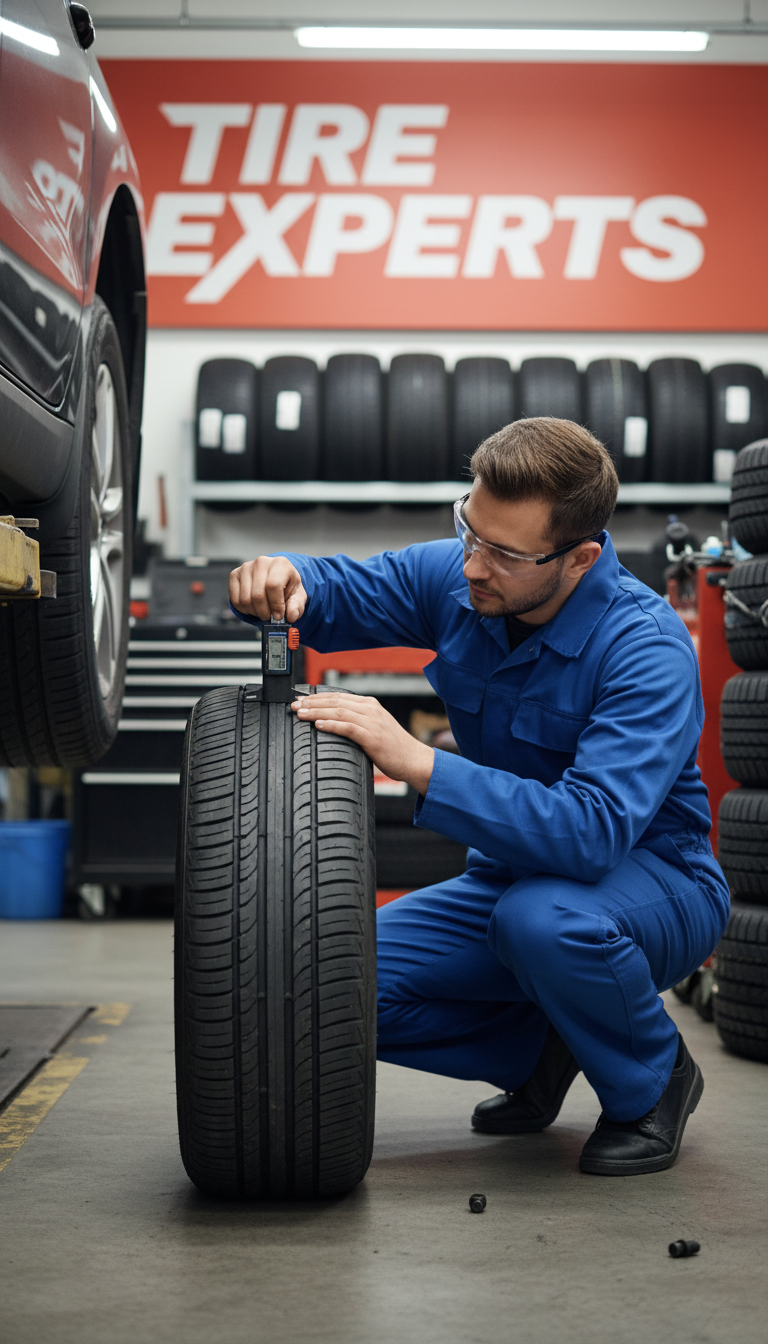
Before proceeding with online tire ordering, perform a physical audit of your current set. The physical condition of your old rubber provides a roadmap for your vehicle's mechanical health. If you ignore underlying mechanical issues, even the highest quality new tires will suffer premature failure. Part of learning how to choose tires effectively involves reading the story your old tread is telling you.
The most basic diagnostic is the penny test. Insert a penny into the tread groove with Abraham Lincoln’s head facing down. If the top of his head is visible, your tread depth is below 2/32 of an inch, the legal limit for safety in Delaware. However, the uniformity of that wear is just as important as the depth itself.
Wear Pattern | Likely Cause | Professional Remedy |
|---|---|---|
Inner or Outer Edge Wear | Improper Alignment (Camber/Toe) | Four-wheel alignment service |
Wear in the Center Only | Persistent Over-inflation | Adjust PSI to door placard specs |
Wear on Both Outer Edges | Persistent Under-inflation | Adjust PSI; check for slow leaks |
Cupping or Scalloping | Worn Suspension or Poor Balance | Inspect shocks, struts, and bushings |
Identifying these patterns helps our technicians provide a more comprehensive professional service experience. For example, cupping usually indicates that the tire is bouncing rather than rolling smoothly, which points to failing shocks or struts. Inner edge wear often suggests your vehicle’s alignment is out of specification, likely from hitting a New Castle pothole. At Limitless Tires, our technicians utilize their 5+ years of experience to diagnose these issues during tire installation and repair. Correcting these mechanical faults before mounting new rubber ensures you maximize the lifespan of your investment and maintain optimal handling on the road.