
You should plan when to put on winter tires Delaware once temperatures consistently drop below 45 degrees Fahrenheit, which typically occurs between November and April. Many drivers follow the rule of installing snow tires by Thanksgiving and removing them after Tax Day; this timing ensures the specialized rubber remains flexible for better traction and safety in freezing conditions.
Delaware winters are notoriously fickle. One morning it is fifty degrees and sunny, but by the evening commute, the wind off the Delaware River brings a biting chill that turns asphalt into a skating rink. Waiting for the first snowfall to schedule your tire swap is a gamble that compromises your safety and your vehicle's performance. In the Mid-Atlantic, the effectiveness of your tires is dictated by the thermometer rather than the forecast on the local news. This guide explores the critical forty five degree rule and the specific timeline for New Castle County drivers. You will learn why October might not be too early for a swap, how the seven-seven rule protects your investment, and why navigating Route 1 or Route 13 requires a specialized rubber compound. At Limitless Tires, we prioritize precision, ensuring your vehicle remains grounded when Delaware’s roads become unpredictable.
Navigating Delaware’s Unpredictable Winter Season
Drivers in New Castle and Kent County understand that Delaware winters are less about constant blizzards and more about a volatile shoulder season. The temperature swings between late October and early December create a hazardous mix of freezing rain and morning frost. A common misconception found on local Reddit threads suggests that all-season tires are sufficient for our region because we rarely see feet of accumulation. However, specialized rubber is not just for trekking through drifts. It is a critical safety tool designed to maintain traction and shorten stopping distances on cold, hard pavement.
As the asphalt cools, standard rubber compounds lose the pliability required to grip the road effectively. This leads to the central question for every local commuter: when to put on winter tires Delaware motorists can rely on before the first freeze? Timing the switch is about proactive safety rather than reacting to a sudden flurry. Limitless Tires is hosting its grand opening in New Castle on October 3, 2026, arriving just in time to help you prepare for the falling mercury. You can shop tires online now to view our real-time inventory or schedule your switch with our technicians, who bring at least five years of experience to every winter tire installation.
The 45 Degree Rule: Why Temperature Matters More Than Snow

The performance of your tires is governed by chemistry, specifically a phenomenon known as the glass transition. Most drivers associate winter tires with deep snow, but the real trigger for winter tire installation is actually the ambient temperature. When the thermometer drops to 45 degrees Fahrenheit (7 degrees Celsius), the rubber compounds in standard all-season tires begin to harden. As the polymers reach this transition point, the tread loses its ability to deform and grip the microscopic textures of the road surface.
Unlike all-seasons, winter tires are formulated with high-silica compounds and specialized resins that remain flexible in extreme cold. This flexibility is vital for New Castle drivers navigating Delaware's frequent freeze-thaw cycles. During a typical November morning in Northern Delaware, the air might feel mild, but the asphalt often remains significantly colder, retaining the overnight chill. If your tires have hardened, your stopping distance increases significantly, even on a perfectly dry road.
Tire Type | Rubber Consistency at 45°F | Road Surface Interaction |
|---|---|---|
All-Season | Hardening / Glassy | Skims over surface textures |
Winter | Pliable / Elastic | Conforms to and grips the road |
This chemical difference explains why you should not wait for a forecast of snow before deciding when to put on winter tires Delaware residents should look at the thermometer instead. In the Mid-Atlantic, we often deal with black ice scenarios where moisture from daytime melting refreezes on Route 1 or Route 13 as soon as the sun goes down. A tire that stays soft at 40 degrees can find traction where a stiff all-season tire will simply slide. You can shop tires online to see which cold-weather compounds are currently in stock for your specific vehicle before the next temperature dip.
When to Put on Winter Tires in Delaware: Key Dates and Regulations
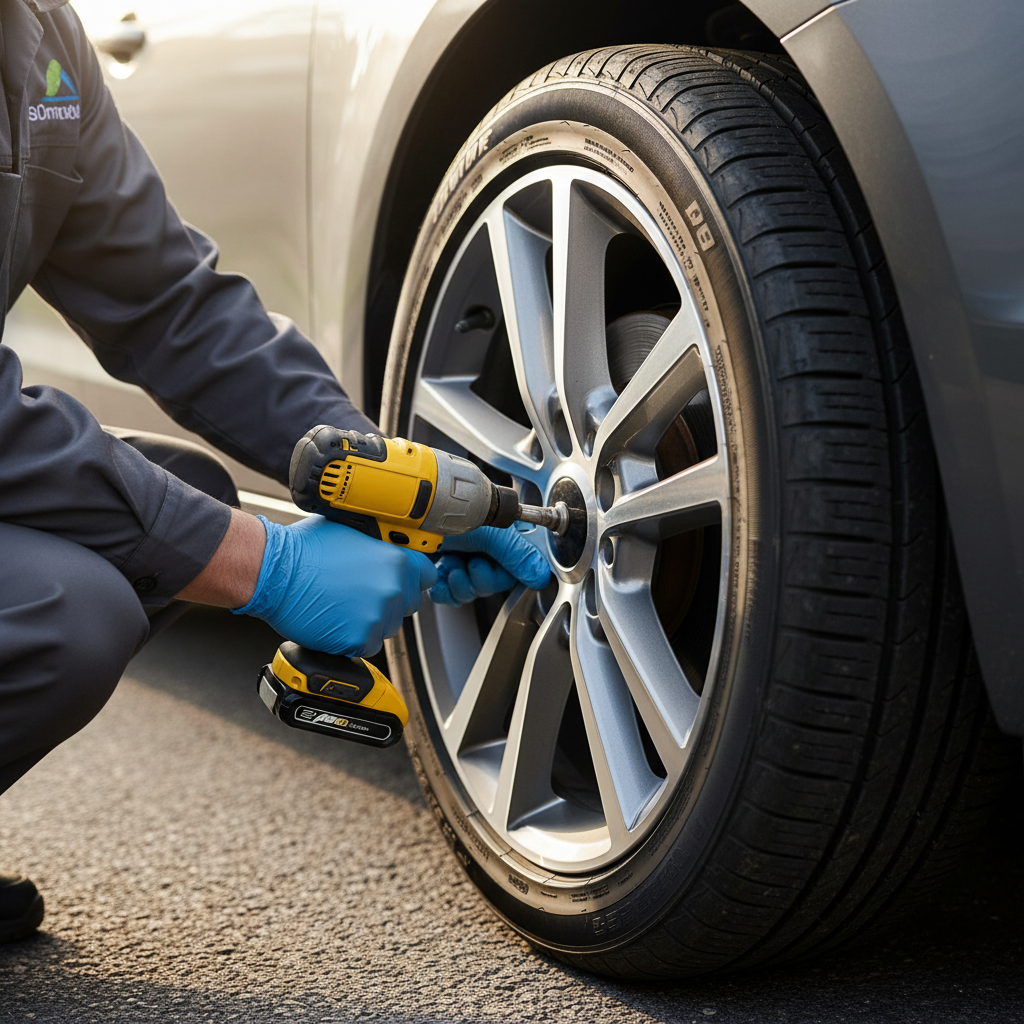
Many drivers across the Mid-Atlantic follow the informal Thanksgiving to Tax Day timeline for seasonal swaps. While this provides a helpful baseline for when to put on winter tires Delaware motorists should adjust this based on the specific microclimate of New Castle County. Because our region sits at the transition point between different climatic zones, frost dates vary significantly from year to year. A reliable indicator for booking your winter tire installation is observing the local forecast for three consecutive nights of temperatures below 45 degrees. Once the ground temperature settles into this range, the cold becomes a constant factor rather than a temporary dip.
Legal regulations also dictate your window of opportunity, particularly if you utilize studded tires for added traction on icy rural roads. Under Delaware state law, studded tires are permitted only between October 15 and April 15. Operating these tires outside this window can result in fines, as the metal studs cause significant wear to dry, warm pavement. If you are unsure which tire type suits your commute through the Christina River Valley, you can shop tires online to compare studdable versus non-studdable winter options.
To avoid the mid-November rush, plan to schedule your switch as soon as the late October forecast shows consistent evening chills. This proactive approach ensures you are not caught off guard by an early November coastal low that brings freezing rain before Thanksgiving. The expert staff at Limitless Tires recommends aligning your swap with the legal October 15 start date for studs, as this typically coincides with the first significant drop in asphalt temperature across New Castle and Kent County.
Is October Too Early for Winter Tires in New Castle?
Drivers often ask if early October is premature for a seasonal swap. The answer depends on the consistent asphalt temperature. If New Castle experiences an extended Indian summer with afternoon highs in the 70s, installing winter tires too early causes the soft, high silica rubber to wear down rapidly on dry, abrasive pavement. This premature degradation reduces the lifespan of your investment. However, delaying until the first actual snowfall is equally risky. Waiting too long leaves you vulnerable to the season's first morning frost on I-95 or black ice on Route 1, where hardened all-season tires will lack necessary grip.
For Northern Delaware drivers, late October represents the ideal sweet spot. By this time, the road surfaces have generally cooled enough to prevent excessive tire wear, yet you are prepared for the sudden temperature drops typical of early November. When determining when to put on winter tires Delaware commuters should target the final two weeks of the month to avoid the mid-November service rush. Limitless Tires opens on October 3, 2026, offering a perfect window to schedule your switch. Our technicians can inspect your current set or help you shop tires online to ensure you have fresh rubber ready. A proactive winter tire installation in late October balances long term tread health with immediate safety during the first freeze.
The 7-7 Rule for Delaware Drivers
To simplify the timing and safety requirements, our technicians follow the 7-7 Rule. This guideline combines the 7 degree Celsius (45°F) temperature threshold with a minimum tread depth of 7/32 of an inch. While Delaware law technically considers tires legal until they reach 2/32 of an inch, winter performance requires significantly more depth to bite into snow and effectively evacuate slush. If your tread is below 7/32, the sipes, which are the tiny slits in the rubber, cannot open wide enough to provide necessary traction on icy New Castle roads.
You can perform a quick check using the Lincoln test. Insert a penny into the tread groove with Lincoln’s head facing down. If the tread does not reach the top of his head, you are below 2/32 and unsafe for any weather. For winter reliability, the rubber should cover the top of his head and reach toward the words at the edge of the coin. If your current set is running thin, you can shop tires online to view replacements. Identifying these needs early helps you decide exactly when to put on winter tires Delaware weather demands. Once you have confirmed your tread depth, you can schedule your switch with an expert winter tire installation before the first frost hits the Christina River Valley.
Why You Need a Full Set of Four Winter Tires
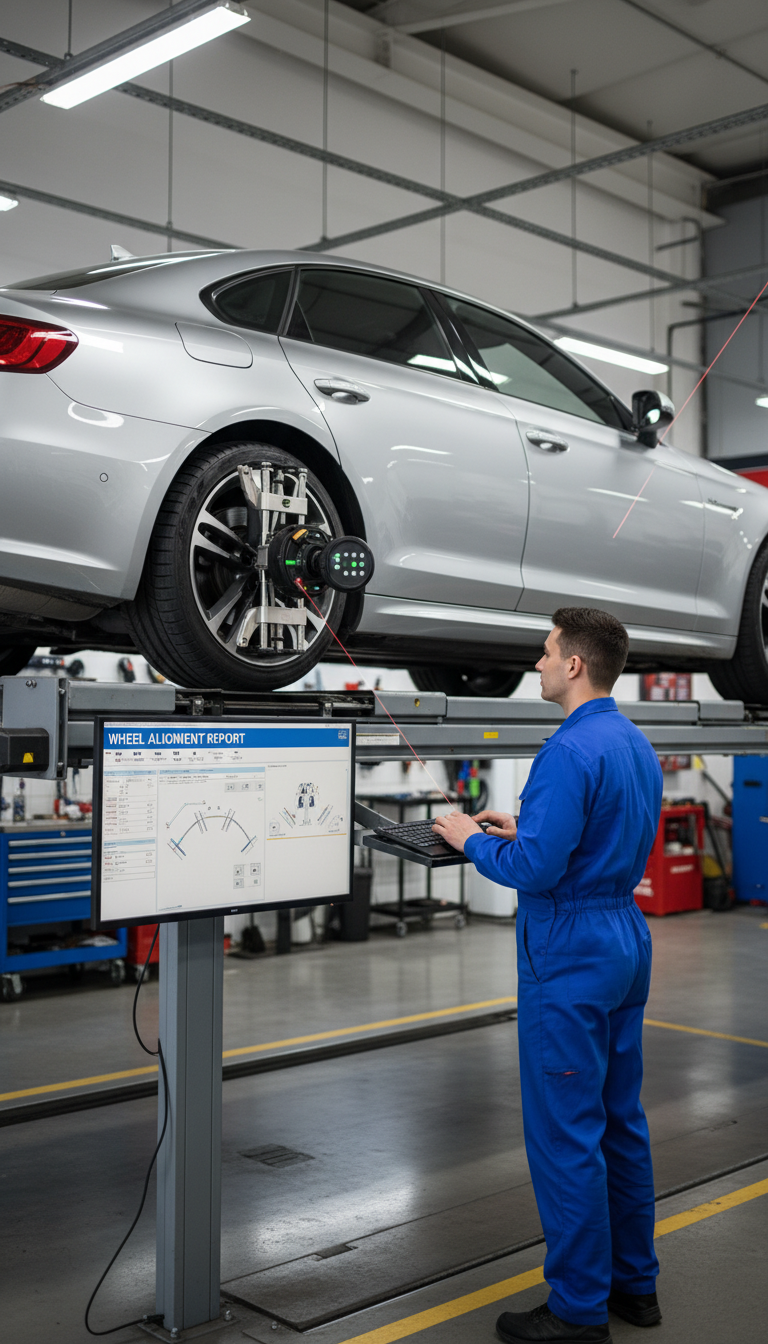
Installing only two winter tires on your drive wheels is a dangerous shortcut that compromises vehicle stability. This practice creates a condition known as split traction, where one axle has significantly more grip than the other. When you are navigating the steep gradients and exposed spans of the Delaware Memorial Bridge, consistent handling across all four corners is non-negotiable. If you place winter tires only on the front of a front-wheel-drive vehicle, the rear tires are prone to losing grip during braking or cornering, causing the car to fishtail or spin out. Conversely, putting them only on the rear of a rear-wheel-drive car helps you accelerate but leaves your front tires unable to steer or stop effectively on slick pavement.
Modern safety systems like Electronic Stability Control (ESC) and Anti-lock Braking Systems (ABS) are calibrated assuming all four tires have similar traction levels. Mismatched grip confuses these systems, potentially leading to unpredictable vehicle behavior on icy New Castle overpasses. When considering when to put on winter tires Delaware drivers must treat the vehicle as a complete system. Before the first frost, shop tires online to secure a complete matching set. Our technicians ensure a precise winter tire installation that maintains your car's engineered balance, preventing the loss of control that occurs when different axles react differently to the road. You can schedule your switch now to ensure your vehicle is balanced and ready for the freeze.
Preparing for New Castle Road Conditions: Route 1 and Route 13
Route 1 and Route 13 serve as the primary lifelines for New Castle County commuters, yet each presents distinct hazards once the ground cools. Route 1 is notorious for the formation of black ice, especially on elevated spans and overpasses where cold air circulates beneath the road surface. This causes asphalt temperatures to drop faster than the surrounding soil, turning morning mist into a transparent, low-friction glaze. Standard all-season tires often lack the surface contact to navigate these patches safely.
Conversely, the heavy commercial traffic and frequent signal stops on Route 13 demand exceptional stopping power. When you are following a loaded tractor-trailer or approaching a sudden red light in freezing rain, every foot of braking distance matters. Winter tires solve this through siping, which are thousands of microscopic slits cut into the tread blocks. These sipes act as biting edges that open up to grab the road while simultaneously wicking away the thin layer of water that forms between the rubber and the ice.
Understanding these local dynamics helps clarify exactly when to put on winter tires Delaware drivers need for their specific daily routes. If your commute takes you across the Christina River or down toward Smyrna, specialized tread is essential for maintaining control. You can shop tires online to find models featuring high-density siping or schedule your switch at our New Castle shop. A professional winter tire installation ensures these specialized compounds are ready to provide maximum bite on the slickest Delaware corridors.
Staying safe on Delaware roads requires more than just careful driving; it involves monitoring the thermometer closely. Once temperatures consistently hover at forty-five degrees or below, your standard tires lose their essential grip. Timing your swap correctly ensures you are prepared for unpredictable ice and freezing rain. If you want expert help navigating this seasonal transition, our team is ready to assist. You can explore our selection of winter tires and book an installation to ensure your vehicle remains reliable all season long.